
Views: 0 Author: Site Editor Publish Time: 2025-07-30 Origin: Site

You need to know the difference between qa vs qc to do well in global trade and making things. Quality assurance and quality control help you stop expensive errors and give products that make customers happy. QA works on making good steps to stop problems before they happen. QC looks at finished products to find any mistakes. Experts say that new quality systems with AI and world rules help work go faster and build trust. Marsky Solutions uses these smart ways to help you get better quality and a stronger business.
Quality Assurance (QA) makes strong steps to stop problems before work starts. Quality Control (QC) looks at finished products to find and fix mistakes. Using both QA and QC helps companies make better products. It also saves money and keeps customers happy and loyal. QA needs everyone in the company to plan, teach, and always improve quality. QC has special teams that check and test products at important times. Following world rules like ISO and using tools like the PDCA cycle help QA and QC work better. These steps also help companies grow in other countries. Marsky Solutions gives expert help in both QA and QC. They help companies control quality from suppliers to shipping for long-term success.
It is important to know about qa if you want a strong business. QA means quality assurance. This is when you make rules and steps to help every product meet your goals before you start making them. QA uses special ways to manage quality and follows rules like the ISO 9000 series. These rules from around the world help you make a plan, check how you are doing, and get better over time. You try to stop problems before they happen, not just find them later.
Some main ideas guide qa:
Customer focus: You want to make customers happy.
Leadership: Managers show how to care about quality.
Engagement: Everyone helps with quality.
Process approach: You add quality to each step.
Continuous improvement: You always try to do better.
Evidence-based decisions: You use facts to decide.
Relationship management: You work with others for better results.
You use the PDCA cycle to plan, do, check, and act. Risk management is part of qa, so you can find problems early. Marsky Solutions helps you set up these plans and checks if your suppliers follow your qa plan.
QC means quality control. You use qc to look at finished products and see if they meet your rules. QC is about checking and testing. You look for mistakes and fix them before you send products out. QC happens after you make things, so you find and fix problems at the end.
You also use ISO rules for qc. Marsky Solutions helps by checking products at every step. They look at samples before you start, check products while you make them, and look at the last group before shipping. Their team checks style, how things work, packaging, and how things are made. You get reports, so you know your products are safe and good.
When you look at qa vs qc, you see they work together. QA puts quality in your process. QC checks the final products. Marsky Solutions gives you both, so you can trust your products in global trade.
It is important to know how qa and qc are different. Qa looks at how you do things in your business. You make good systems and steps so every product is made right. Quality assurance helps you plan, write down, and improve how you work. You decide what to do before you start making anything. You teach your team, check your work, and talk to suppliers. You use iso rules to help with your process.
Qc looks at the products you make. You use quality control to check finished items. You look at, test, and measure things to see if they are right. You find mistakes and fix them before you send products out. Qc uses ways like checking groups of products, picking samples, and testing in labs. Special qc workers do these checks.
Here is a table that shows the main differences:
Aspect | QA - Process-Oriented Activities | QC - Product-Focused Activities |
|---|---|---|
Focus | Preventing defects through process design and adherence | Detecting and correcting defects in final products |
Timing | Throughout production lifecycle | At the end of production |
Objective | Build robust processes to prevent defects | Inspect and correct products to meet standards |
Activities | Planning, documentation, training, audits, supplier management | Inspection, testing, defect identification, correction |
Nature of Inspection | Process and system adherence | Final product or output inspection |
Involvement | Entire organization | Dedicated qc personnel |
Timeline Impact | Long-term process improvement | Immediate impact on product batches |
Goal | Prevent defects by ensuring process quality | Detect and correct defects for product quality |
Marsky uses both qa and qc. Their team helps you set up good qa systems. They also do qc checks at every step.
Qa tries to stop problems before they happen. You use assurance to make sure things go right. You plan, teach, and check your work. You use iso rules to help you. You keep making your process better. You want to stop mistakes before they get to your products.
Qc tries to find problems after things are made. You use control to look for and fix mistakes. You check products, test samples, and look for errors. You use tests like checking if things work, scanning barcodes, and drop tests. You fix things when you find problems. Qc is your last check before customers get products.
Tip: If you want fewer mistakes, use qa to stop problems. Use qc to find any issues that get through.
Marsky’s checks show how stopping and finding problems work together. Their quality auditor looks at your process for assurance. Their quality engineer checks your products for control.
Qa is proactive. You act before problems start. You plan your work, teach your team, and look for risks. You use assurance to put quality in every step. You follow iso rules and keep making your work better.
Qc is reactive. You act after products are made. You use control to check and test finished things. You fix mistakes before you send products out. Qc helps you not send bad products to customers.
Proactive qa gives you better results. You get good products, fewer mistakes, and happy customers. Reactive qc helps you find mistakes, but it can slow things down or cost more.
Qa needs everyone to help. You need managers, people who plan, qa workers, and all team members. Everyone follows the same rules. You use assurance to make sure every part of your work is good.
Qc needs special workers. You need qc workers, people who check, and testers. They use control steps to check products. They write down mistakes and help fix problems with the team.
Marsky’s team has both qa and qc experts. Their quality auditor plans checks and looks at how you work. Their quality engineer checks products and looks for mistakes.
Qa starts at the very beginning. You use assurance from the first idea to the last delivery. You plan your work, set rules, and watch quality all the time. Qa is something you do all the way through.
Qc happens at the end or at important times. You use control to check products after they are made. You test, measure, and check things before you send them out. Qc is your last chance to find mistakes.
Marsky does qa work like checking suppliers and looking at your process early. They do qc checks like looking at products before shipping and testing in labs before things leave the factory.
Note: Using both qa and qc gives you the best results. You stop mistakes with assurance and find any left with control.
Marsky’s real stories show how qa and qc work together. For example, they check suppliers to make sure the process is good (qa). They look at finished products to make sure they are right (qc). Their team uses iso rules for both assurance and control. You get checks at every step.
You need both qa and qc for the best products. Use assurance to make good steps. Use control to check your products. Marsky helps with both, so you can trust your products in global trade.
Quality assurance and quality control have many of the same goals. Both help your business make products that customers want. This builds trust in your brand. When you use both, your company gets stronger and does better.
Both try to keep product quality the same every time. This keeps customers happy and coming back.
You can save money by stopping problems and not having to fix broken products.
These steps help people see your company cares about quality.
You save time making, checking, and testing products, so work goes faster.
Both help you get better by finding problems, making changes, and seeing if those changes help.
You must spend money on training, tools, and other things for both assurance and control to work well.
Both help you follow world rules like ISO 9001, so more people trust your business.
If you work on these goals, your business will be stronger and can beat other companies.
Quality assurance and quality control work together as a team. You use quality assurance to plan and set up steps that stop problems before they start. You use quality control to check products and fix any problems you find.
Aspect | Quality Assurance (QA) | Quality Control (QC) |
|---|---|---|
Focus | Proactive, prevents defects through process design | Reactive, finds and fixes defects in products |
Timing | Early in production, continuous improvement | After production, during inspection and testing |
Approach | Process improvement, standards, and documentation | Product checks, testing, and corrective actions |
Responsibility | Everyone in the organization | Dedicated QC teams |
Goal | Build quality into every step | Ensure finished products meet quality standards |
You need both assurance and control to make customers happy and follow world rules. Quality assurance gives you the plan and rules. Quality control checks if your products are right. Together, they help you make good products, lower risks, and keep getting better. Marsky Solutions uses both to help you do well in global trade.
When you use qa, your business gets stronger. Quality assurance helps you make clear rules for every job. This helps your team do things the same way each time. It also helps stop mistakes before they happen. You save money because you find problems early. You can follow industry rules, so you can sell in more places and grow faster.
Here is a table that shows how qa helps your business:
Business Benefit | Measurable Impact / Description |
|---|---|
Financial Returns | Up to 300% ROI; 67% of organizations save at least $25,000 within one year |
Operational Consistency | Reduces process costs by 15%, errors by 30%, fewer customer complaints, and improved forecasting |
Increased Profits | Internal efficiency gains, new market access, and increased sales contribute to stronger financial performance |
Improved Customer Satisfaction | Systematic feedback and monitoring reduce complaints and churn, increasing profitability |
Minimized Mistakes & Rework | Reduces costly rework and recalls, which can be 15-35% of business costs; early detection prevents expensive fixes |
Evidence-Based Decision Making | Real-time data use removes subjectivity, supports continuous improvement, and mitigates compliance risks |
Market Expansion | Simplifies compliance for new markets, enabling faster scaling and competitive agility |
You also build trust with customers by giving them good products. Quality assurance experts help you keep your standards high and your business strong.
QC lets you check your products before customers get them. Quality control helps you find and fix problems, so you do not have to recall products. You use qc to test and look at every batch. This keeps your brand safe and your reputation good.
When you use qc, you lower your risk and make customers happier. You also follow the law and avoid getting fined.
Here are some main benefits of qc:
You find and fix bugs, which saves time and money.
You meet industry rules, so you stay ahead of others.
You give the same good quality every time, so customers trust you.
You use checks and management to help you make better choices.
Marsky Solutions uses both qa and qc to help you do well in global trade. Their team checks your suppliers and your work steps for quality assurance. They also look at your products at every step for quality control. Marsky’s system covers everything from raw materials to shipping.
You see real results when you work with Marsky. For example, they check products before they leave the factory. They check your suppliers to make sure they follow the rules. They watch your goods during loading to keep them safe.
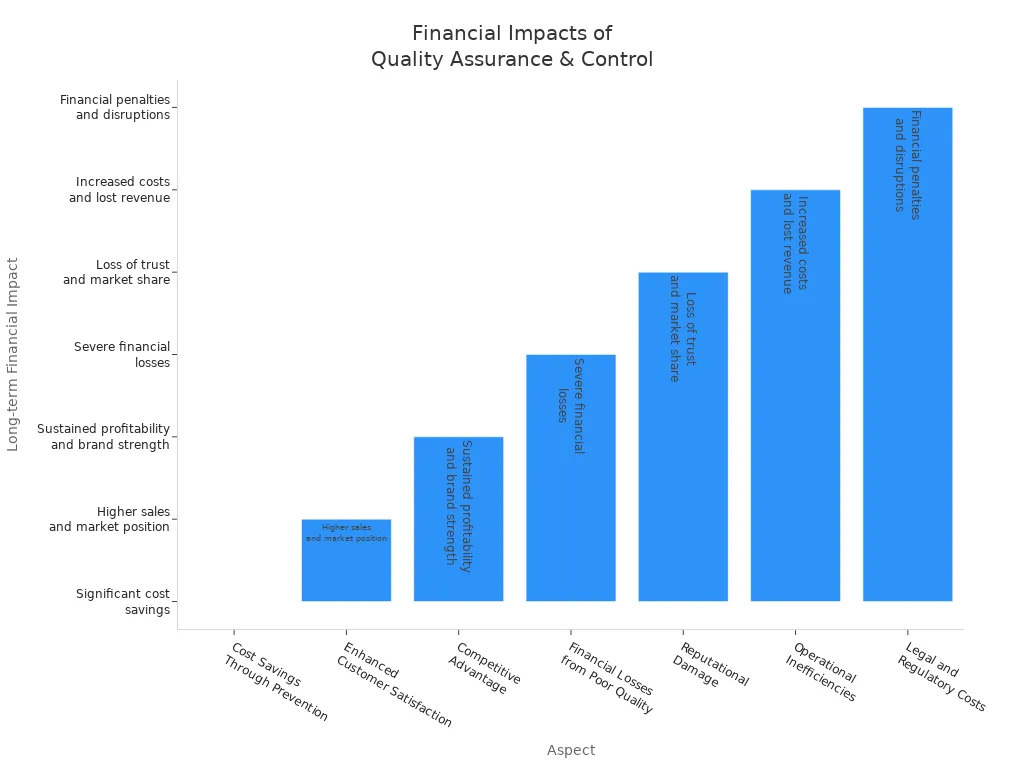
When you use qa and qc, you stop big mistakes. You also make customers happy and build a brand people trust. Marsky Solutions gives you the tools and help you need for good quality, better work, and long-term success.

You need to use both qa and qc for good quality. Qa helps you stop problems by making good rules and steps. Qc lets you check and fix products before customers get them. Using both makes customers happy and keeps them coming back. You also save time and money by fixing fewer mistakes. This helps your business make more money and look better to others. Your quality system should match your business goals. Leaders must support qa and qc as important parts of your plan. Training and new tools, like AI, can help you do qa and qc better.
Tip: When you use qa and qc together, you stop problems and find any that are left. This helps you keep getting better and have good results.
Here are steps to use qa and qc in your business:
Make a quality system with rules like ISO 9000.
Use the Plan-Do-Check-Act steps for qa.
Get leaders to help and include all teams.
Learn what your customers want and what rules you must follow.
Write a clear quality policy and set SMART goals.
Draw your steps and find key places for qc checks.
Write down all rules and instructions.
Teach your team about quality and tools.
Work with suppliers so materials meet your needs.
Check products at every step with strong qc.
Check your system often and see how it is doing.
Fix problems and keep making your system better.
You may have problems when you start qa and qc. The table below shows common problems and ways to fix them:
Common Challenges | Solutions |
|---|---|
Resistance to change | Talk about benefits and include everyone |
Poor communication | Make clear ways to talk and give updates |
Limited resources | Plan money and use what you have well |
Measuring quality | Use KPIs and watch your data |
Rigid strategies | Check plans and set small goals |
Ignoring customer feedback | Collect and use feedback to get better |
Supplier resistance | Match rules and explain why they help |
Compliance issues | Follow ISO rules and use new tools |
You can solve these problems by working as a team, teaching your staff, and always trying to get better. When you use qa and qc together, your business gives good quality every time.
Qa and qc do different jobs, but they have the same goal. They both help you give good quality every time. Qa makes strong steps to stop problems before they start. Qc checks products to find mistakes. When you use qa and qc together, you build a system that keeps getting better. This helps customers trust your business. To do this well, you should:
Look at how you use qa and qc now.
Teach your team about quality rules.
Check your work often and watch results as they happen.
Marsky Solutions helps you use qa and qc together. They give you local help and good ways to manage quality for your business.
Quality assurance makes strong steps to stop mistakes. Quality control checks finished products for problems. You need both to give good products and make customers happy.
You get help from experts for checking suppliers and products. Marsky Solutions helps you follow world rules and avoid big mistakes. They help you build trust with buyers.
You should check products before making, while making, and before shipping. This helps you find problems early. It makes sure your products are good.
Quality control finds problems before you ship products. You have fewer returns and fewer fights with customers. Marsky Solutions gives you reports to help you choose what to do.
Supplier audits help you see if a factory can do good work. You pick partners who follow rules and make good products. Marsky Solutions gives you clear results so you can choose the best suppliers.


